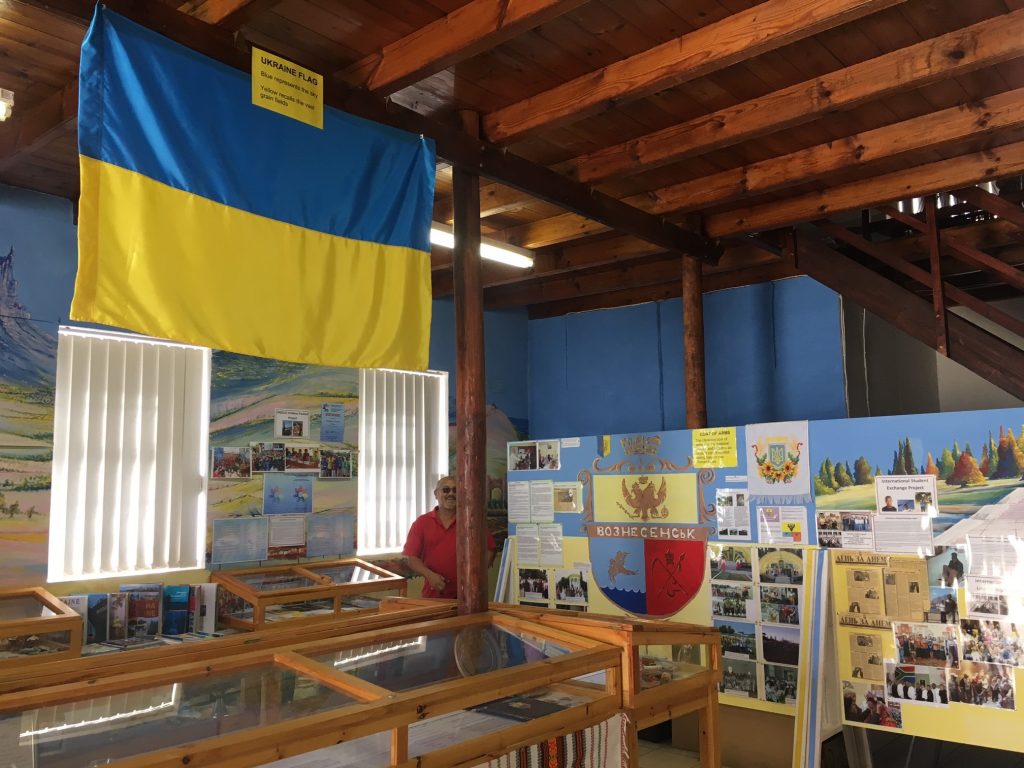
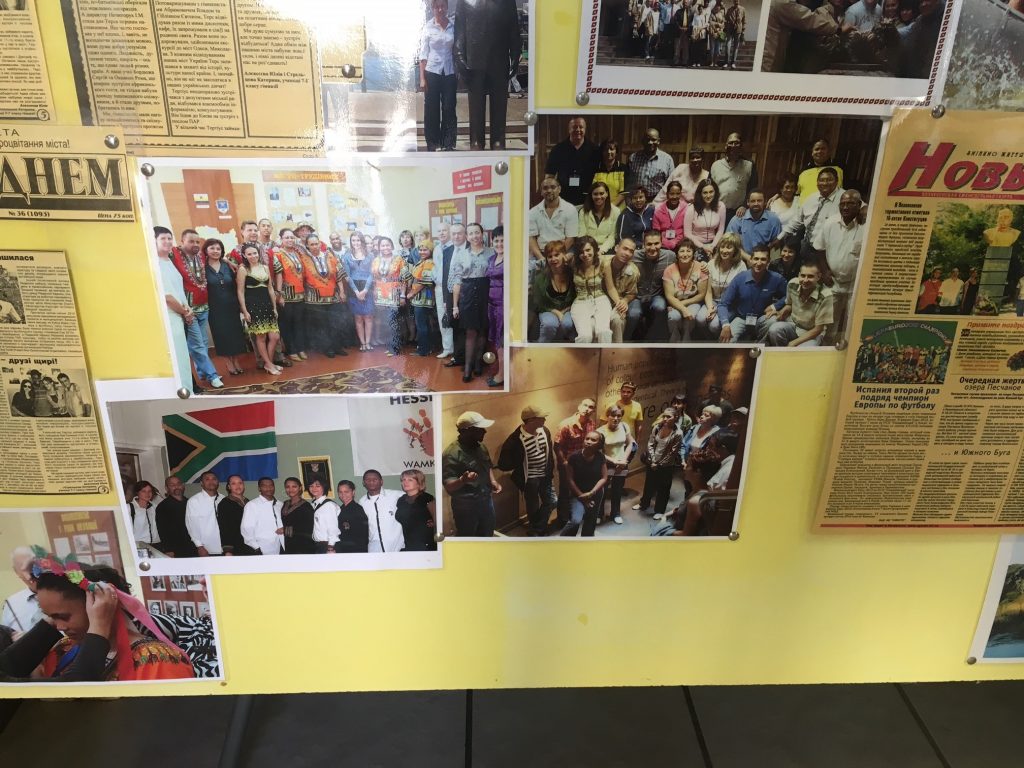
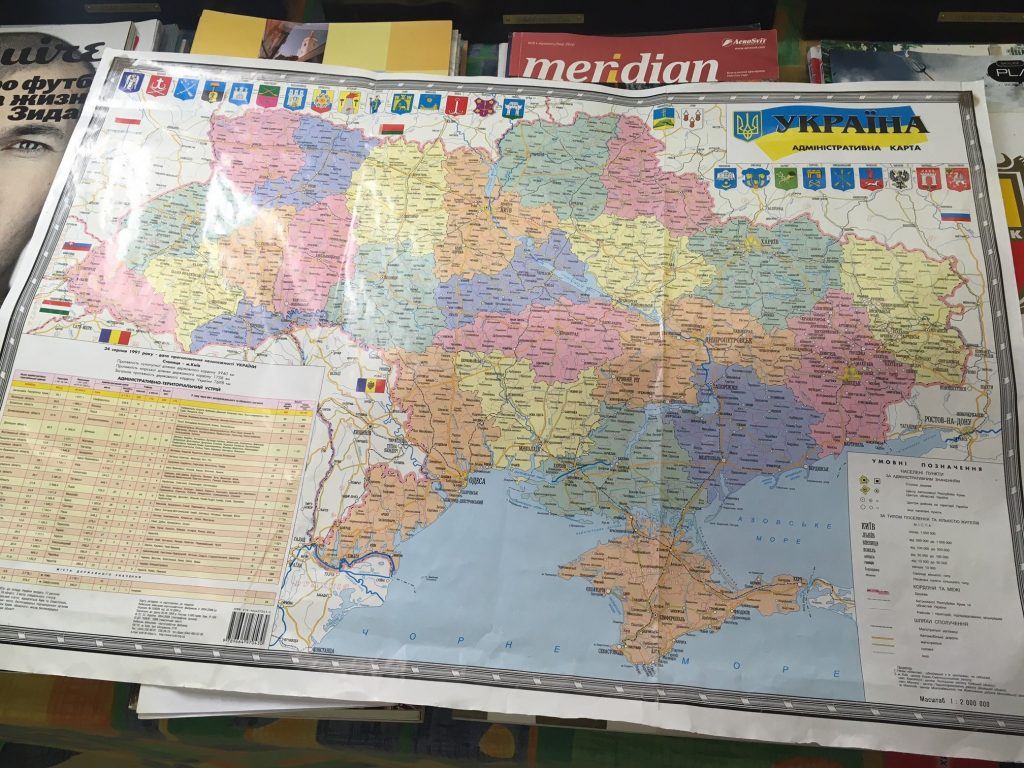
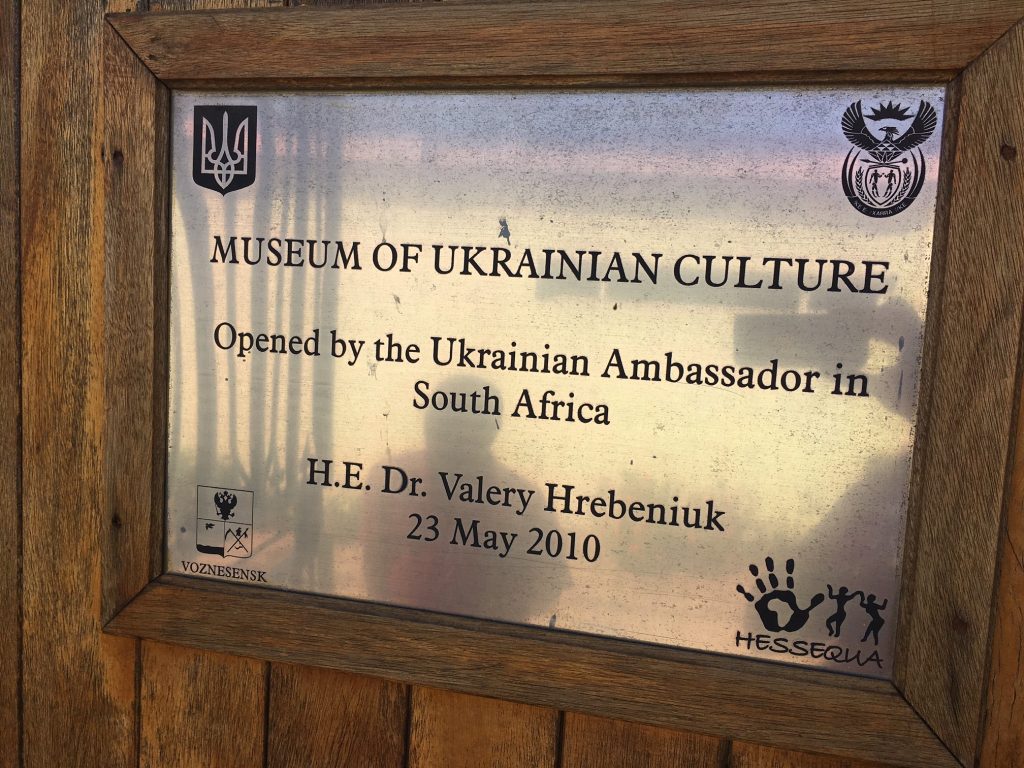
In 2010, the Riversdale Ukrainian Museum opened in Hessequa Municipality. The museum showcases traditional clothing, cultural artefacts, a mural depicting Crimea, and the history of Ukrainian–South African cooperation between the Hessequa and Voznesensk municipalities.
This cooperation began in 2004 when the mayor of Riversdale, Chris Taute, and the mayor of Voznesensk, Yuriy Gerzhov, met at a conference in Poland. Recognising the potential for collaboration, the two leaders signed a twinning agreement between Hessequa and Voznesensk. In 2007, this partnership led to the creation of the HaQua Youth Programme, which was later renamed the International Leadership Programme. The programme is held annually, alternating between South Africa and Ukraine. As a result, more than 200 Ukrainians have visited South Africa, with a similar number of South Africans travelling to Ukraine.
The International Leadership Programme teaches Ukrainian and South African delegates about each other’s history, culture, languages, people, and traditions. In South Africa, the Good to Share Leadership Foundation runs the programme under the management of Christopher Taute. In Ukraine, Voznesensk Municipality administers the programme, with Mrs Inna Slavich, Mrs Tatyana Tereshchenko, and Mrs Liudmyla Momotenko serving as its organisers.
In 2010, Liudmyla Momotenko, in cooperation with South Africans who had visited Ukraine, curated most of the museum’s exhibits. The Embassy of Ukraine to South Africa supported the museum’s official opening.
Inside the museum, visitors can admire a beautiful mural of the famous Crimean castle, Swallow’s Nest (Lastivchyne Hnizdo), created by the late local artist Compion Saayman after his visit to Ukraine. Another notable exhibit is the Stone of Love, a gift from the mayor of Voznesensk. Over the years, the partnership between the two communities has resulted in several successful marriages, and South African–Ukrainian families now live in both Ukraine and South Africa.
In March 2015, artists created another mural on one of the museum’s walls, depicting children from South Africa and Ukraine alongside landscapes from their hometowns.